
Album Cover Art, 2025
Introduction
2025 was a good year for music, as every year is, if you know where to look. But we can't deny it was also the year AI truly established itself as a threat to the creative industry. Now, more than ever, it's worth taking a closer look at the legacy being left behind by actual human hands.
The lines between human and artificial became blurred as AI propelled us into a surreal, hyper-accelerated audiovisual world. A new consciousness, one that feels artificial but is actually undeniably collective from all the data we provide it with. An "intelligence" built from the accumulated opinions of humanity: spreading information and misinformation, political belief and bias and curated data. And film. And music. And photography. And graphic visuals. And everything you could ever imagine.
For a long time, it felt like we were skiing the same mountain-route as we always had. The conditions were perfect. The visibility was high. Risk appeared to be zero. But that's the thing. Zero risk doesn't exist, does it? What felt like a microsecond later, we found ourselves helpless, caught in an avalanche we helped trigger. In freefall, we still don't know the full scope of what we've unleashed. We only know it's happening.
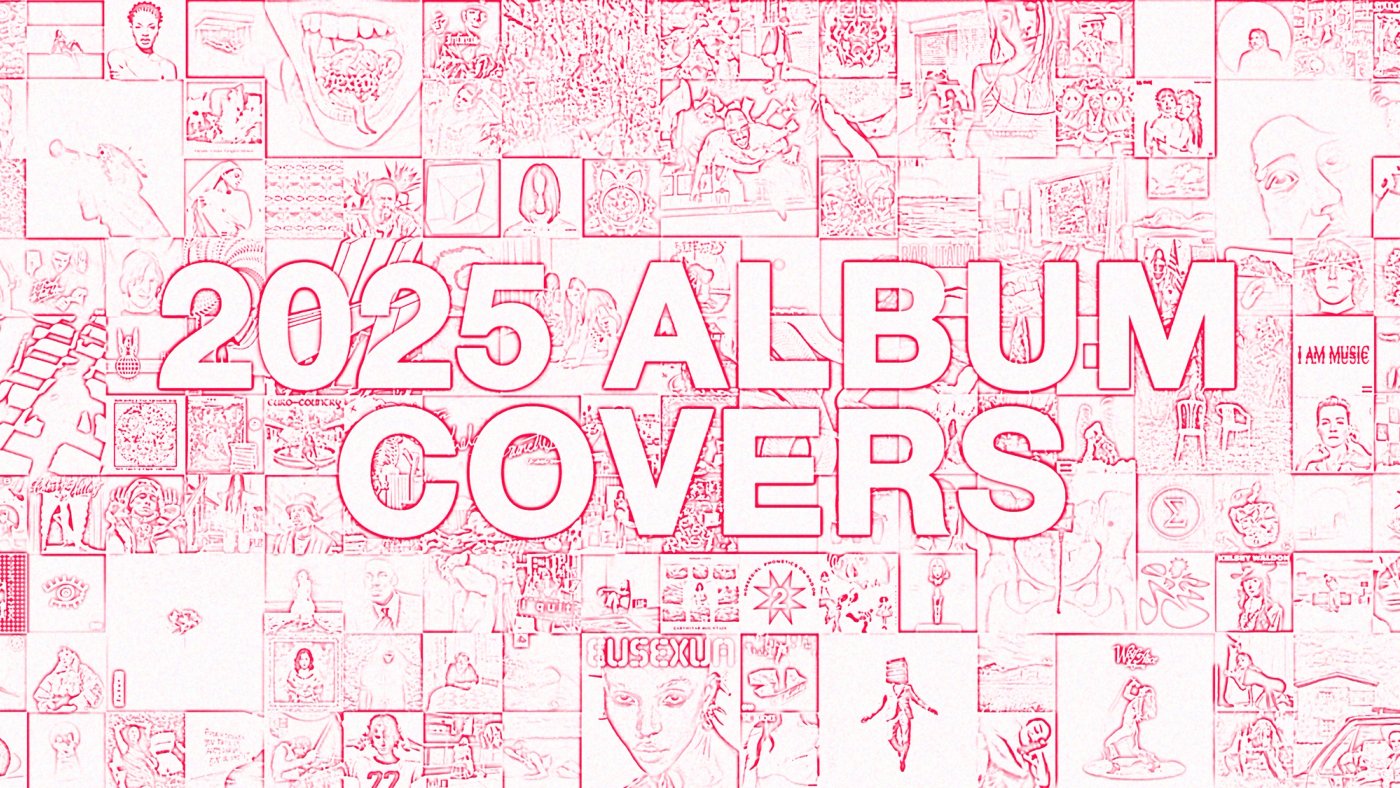
So before this avalanche fully swallows us, this study offers a blend of data-driven and interpretative analysis, examining the album covers that rose above the chaos: the masterful human-made visual statements that appeared on the top-album lists of renowned music magazines in 2025.
This study draws on the 2025 year-end “Top Albums” lists published by Pitchfork1https://pitchfork.com/features/lists-and-guides/best-albums-2025/ and Rolling Stone2https://www.rollingstone.com/music/music-lists/best-albums-of-2025-1235466292/. To incorporate a focus on album cover art, the study also considers The Creative Review’s “The Best Album Art and Design of 2025” top 10 list.3https://www.creativereview.co.uk/the-best-album-art-and-design-of-the-year-2025/ Using these sources as a representative cross-section of albums that received significant critical attention within the Western music sphere.
This study focuses exclusively on album cover art released digitally to the general public. Broader creative directions, album sleeves, and alternative vinyl editions are not considered.
Why Are Album Covers Important?
Treating album cover art as an afterthought is not uncommon, yet the visuals are often the first crucial point of contact between the listener and the sonic experience of the album.
When you put your music on shuffle on any streaming app today, you can go through listening to a plethora of tracks without ever noticing the album cover. Perhaps in the age of music streaming and mass production, it’s easier than ever to overlook album artwork. But the truth is that it remains integral to the journey and ecosystem of an album. Whether you grew up fishing for gold through vinyl, CDs, cassettes, or streaming apps, their visual identity was always there, waiting to be noticed and to stand out from the masses.
Album covers also act as memory anchors. Some people remember the artwork more easily than the album title or release date. This is often explained by the picture superiority effect: images are simply more likely to be remembered than words. From a marketing perspective, cover art is reused across tour posters, merchandise, and social media, shaping how audiences engage with the music far beyond the initial listen.
Another element of the relationship between music and imagery is captured by Noah Dillon, photographer and creator of Rosalía’s album cover for LUX, who stated in a The Fader interview with Steffanee Wang:
“A compelling cover communicates the vision of the artist and shows them something about the work that they hadn’t yet seen.”
Cover art has done its job extremely well if it remains distinguishable even in the most minute details or color references. Charli XCX's 2024 album Brat is a strong example. Its simple yet distinctive visual identity, blunt sans-serif typography and a neon slime-green,4On the Tape Notes podcast, Charli, A.G. Cook, and George Daniel respond to the question, “What are the Brat colors for anyone who doesn’t know?” with: “Well, there’s the ‘Brat green,’ and then there’s the Brat green European version and vinyl version, and then there’s the Britpop T-shirt green. It’s all a bit… green.” https://www.youtube.com/watch?v=4642FmVBWDI was widely replicated online as memes, reinforcing the album's themes of overt confidence, jealousy, and release, while also slightly subverting the word "brat" itself, which evokes "an ill-mannered annoying child."5Merriam-Webster. "Brat." Merriam-Webster.com Dictionary, Merriam-Webster, www.merriam-webster.com/dictionary/brat. Anything sufficiently bold, subversive, or "cunty" became "brat-coded". At this point, there has also been a "Brat Generator6https://www.bratgenerator.com/" created for the purpose of creating brat memes. This case also illustrates a broader principle: artwork should ideally match the tone of the music if it wishes to build a world beyond the sound itself. If it fails to do so, it loses a major opportunity to world-build for the listener, who might otherwise forget the album amid mass music production.
Quantitative study #1
The first phase grouped the selected albums by imagery type and assessed how often each category appeared. Classifications were based on close visual analysis of the album covers, supported by publicly available information about how the imagery was produced and the context in which it was created.
Note: Several album covers exhibited characteristics spanning multiple categories; in such cases, classification was determined according to the predominant perceived nature of the imagery.
The four categories identified were:
Illustration / Digital Art
Photography
Collage / Mixed Media
Minimalist Graphic / Typography
Trend analysis
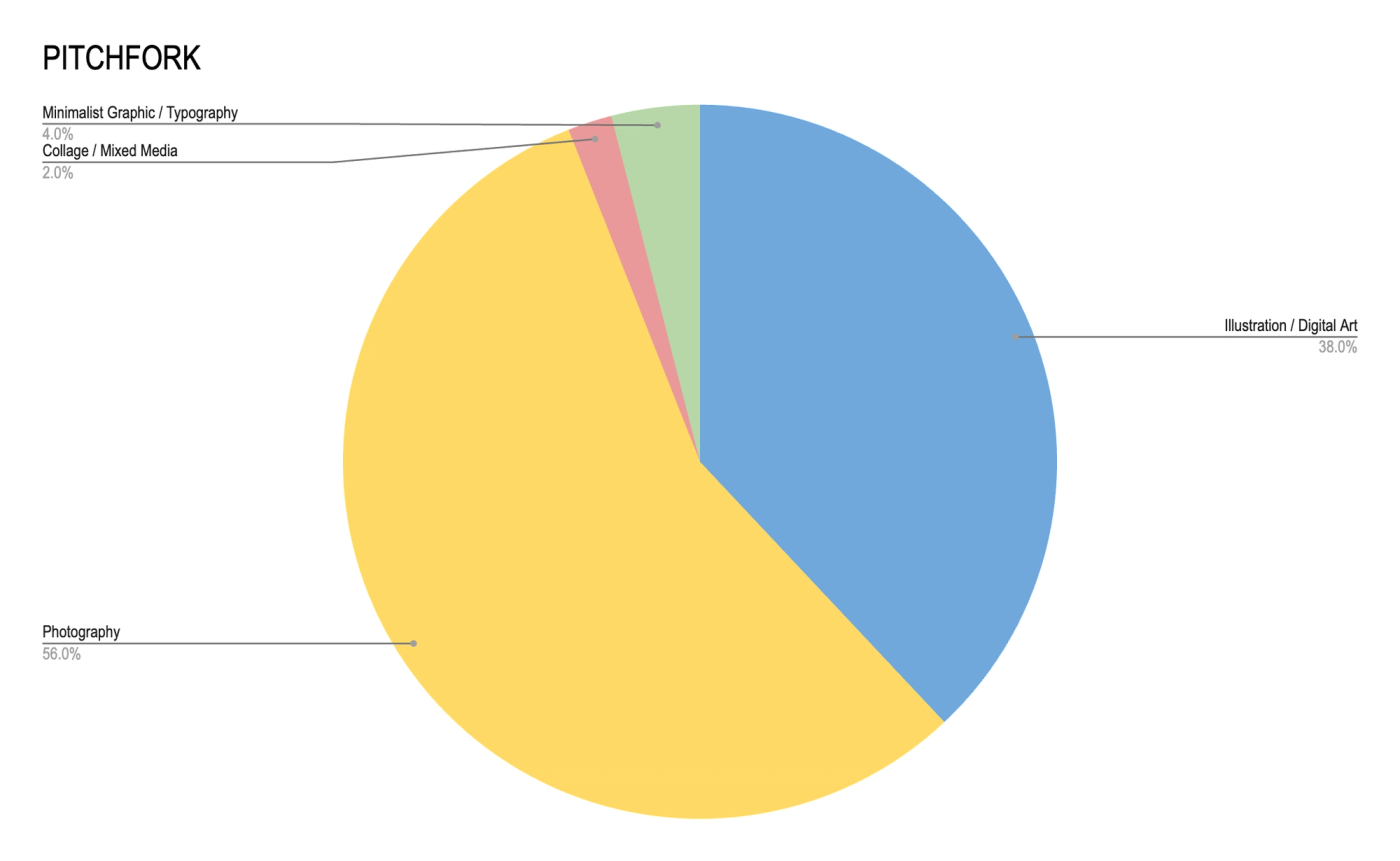
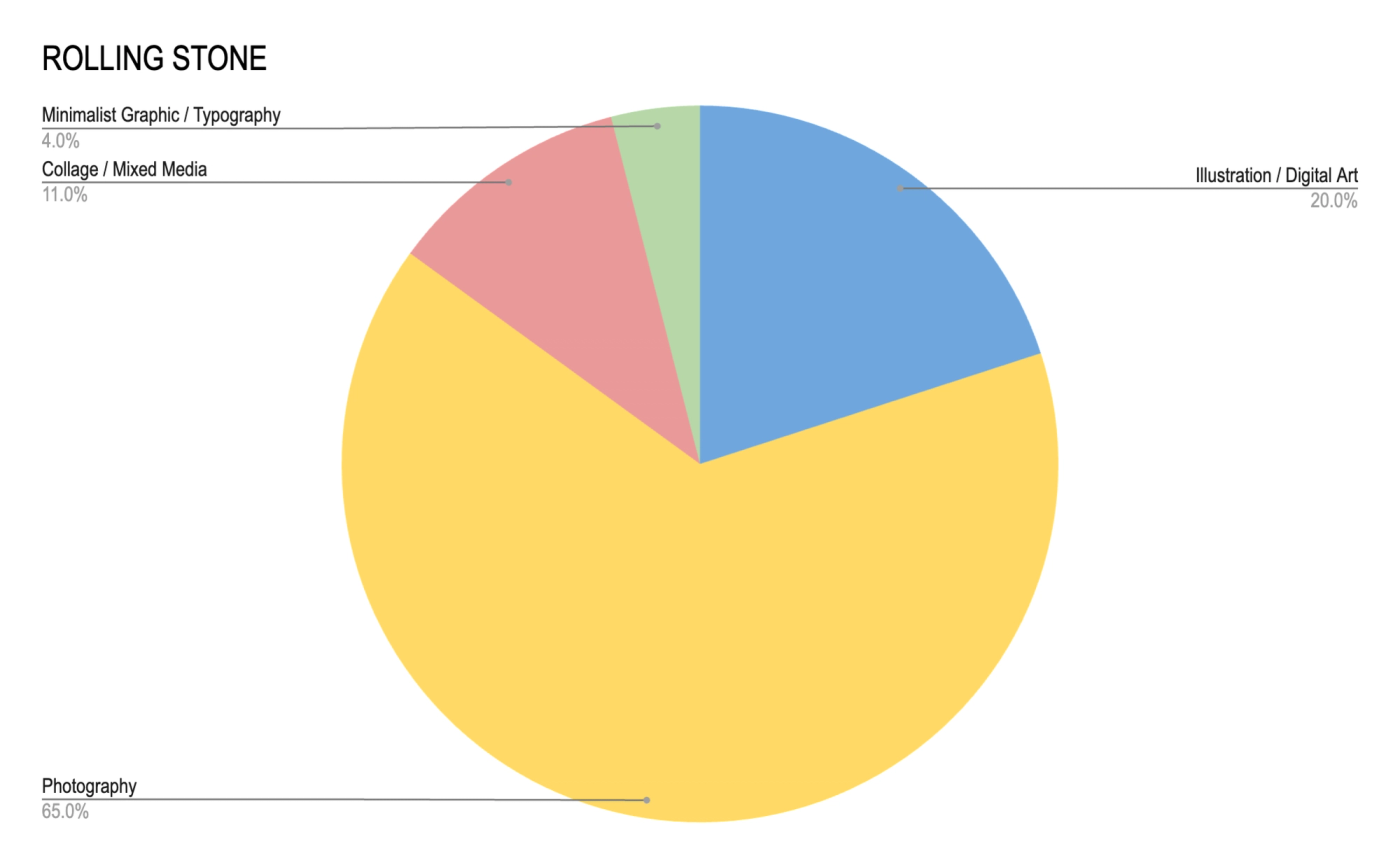
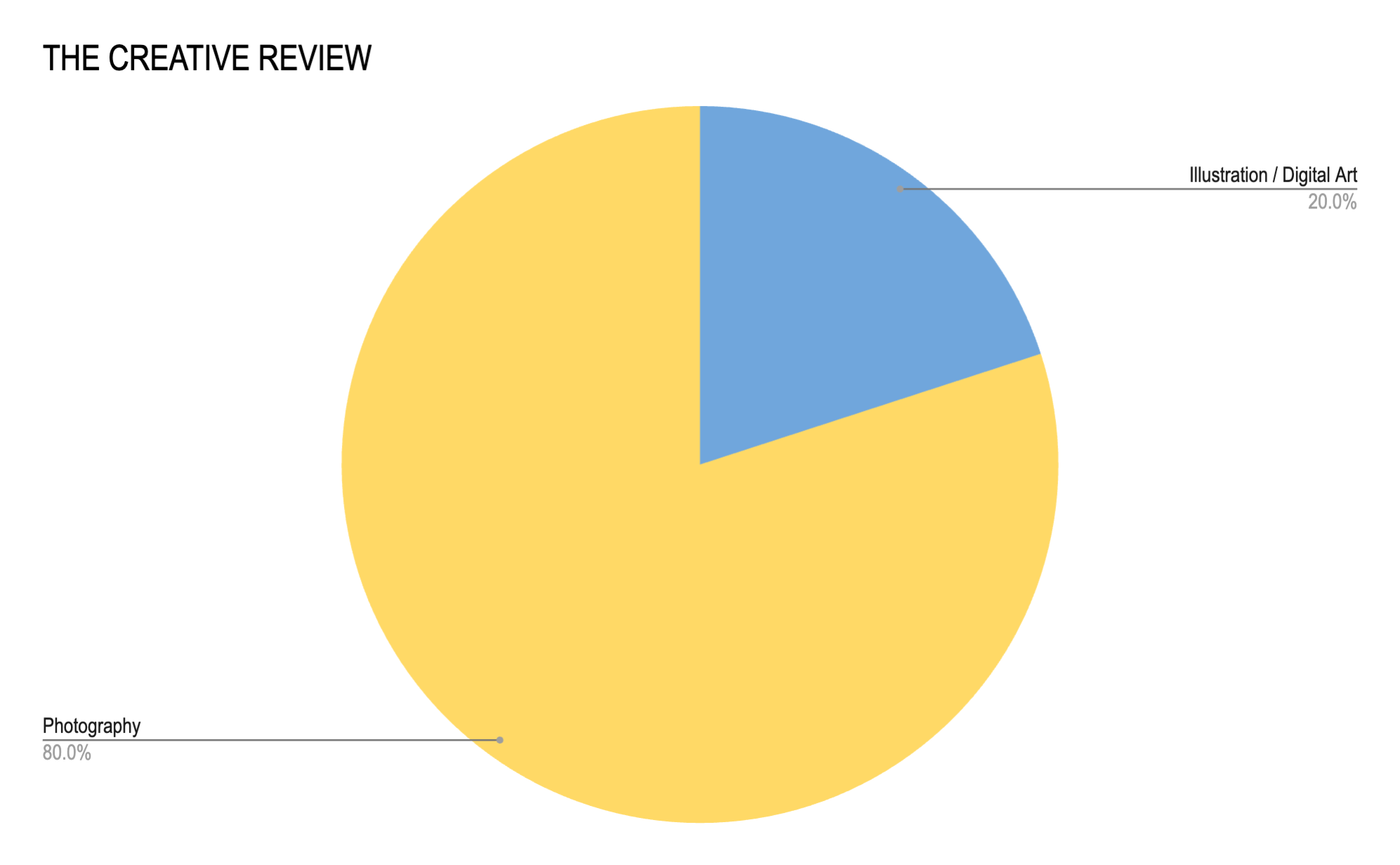
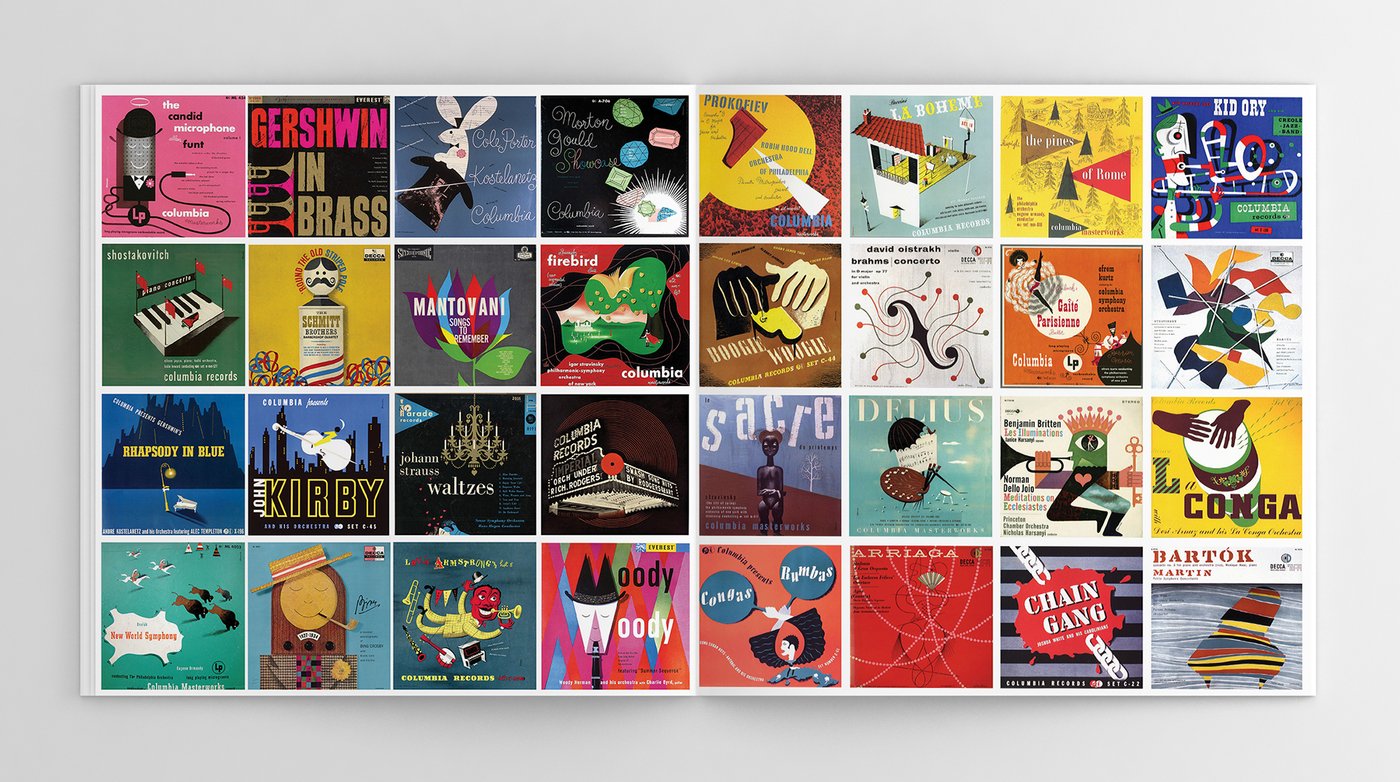
While album covers originally relied on illustration, as seen in the work of pioneers like Alex Steinweiss, illustrator and Columbia Records’ art director in the 1940s, our findings show that photography now dominates. Digital and illustrated covers, however, are still putting up a good fight.
These trends may have several causes. Cost plays a role: photographic equipment has become more accessible over recent decades, making photography a cost-efficient way to achieve strong visual impact, while digital design tools have made illustration and graphic design increasingly affordable in turn. That said, creative intent and marketing are likely more important than budget alone.
Looking back at Steinweiss' illustrated covers, many draw us into a fantasy world that echoes the music itself. In recent decades, however, there has been a rise in covers that feature the artist at the forefront, reflecting the role their image plays in promoting music. A familiar face immediately connects the listener to a recognizable world or sound, helping to build the artist's identity alongside the music.
Some covers make the most of both, such as Lily Allen's West End Girl, which features a realistic painted portrait. Illustration here is not a matter of necessity but a deliberate deviation from a standard studio photoshoot, referencing something naturalistic and imperfect that a clean digital photograph could not convey. Much like the music and lyrics, Allen’s cover reflects the flaws and complexities of a marriage. A marriage is not a single frozen moment captured in a photograph. Just like a painting, it evolves over time, is shaped, molded, and painted, and it can eventually be ruined by mistakes or shadows that arise and overtake the entire œuvre. Here, the deeper intent of creative direction becomes evident and helps convey Allen’s post-divorce mournful yet confident state.
Illustration can also transport the listener into virtual worlds and dreamlike spaces, as with Alex G's Headlights, whose storybook romanticism references 1980s aesthetics reminiscent of the Heavy Metal franchise. The retro, highly illustrative artwork mirrors the immersive world-building found in the songs themselves, from acoustic ballads to layered guitars and electronic beats.
The strength of these artistic choices explains why the minimalist graphic and typography category falls behind the others. Minimalist covers carry risk: without external references, listeners may struggle to understand what the album offers. Artists like Justin Bieber can rely on an established fanbase to make minimalism work, but for many others, the visual world matters enormously. It is worth asking whether iconic albums such as Joy Division's Unknown Pleasures would have had the same success without its iconic sound-wave cover. Or perhaps visit this Reddit thread for more real-world examples of cover art influence.
Quantitative study #2
The quantitative section of this study analyzed the average hex code of each album cover and mapped it to a 12-color wheel using a simple Python script. For the Rolling Stone list, the most prominent colors were gray (28%), red (18%), red-orange (14%), and blue-green (12%).
It's worth noting that these results don't always reflect how covers are actually perceived. The gray category captures not just neutral or black-and-white covers, but also colorful albums whose averaged hex code skews neutral. CMAT's Euro-Country is a good example: its hex code (#9BA5A6) reads as gray, yet viewers are more likely drawn first to the blues of the outfit and sky, and the reds and greens throughout the image. The 12-color wheel is a useful tool for broad patterns, but it flattens nuance.
Monochromatic covers make the clearest case for color as intention. When an artist commits to a single dominant hue, the choice reads as a statement about the emotional world of the album and the feeling it's designed to evoke.
Red is the most immediately striking of these choices. According to Niels Nijda's "Mapping Emotion to Color,"7Nijdam, Niels A. "Mapping emotion to color." Book Mapping emotion to color (2009): 2-9. which synthesizes multiple studies on color-emotion associations, red is uniquely tied to both ends of the emotional spectrum: on the positive side, passion, love, arousal, beauty, and grace, and on the negative, anger, stress, and rage. This duality of these specific emotions can be mapped onto the subject matter of a significant amount of popular music and could be a testament to why it is often used. Fully red covers in this sample include PinkPantheress' Fancy That, Amber Mark's Pretty Idea, Fola's Catharsis, and Nourished By Time's The Passionate Ones, whose deep crimson (#8e0e1f) sits at the darker, more visceral end of the red spectrum. Jennie's Ruby and Fuerza Regida's 111xpantia use red alongside black and white to sharpen its impact even further.
The red-orange category, accounting for 14% of covers, leans warmer and more sensory. Karol G's Tropicoqueta, with its tropical oranges and sun-drenched palette, fits naturally here, signaling heat and vibrancy rather than the emotional intensity more closely associated with red.
The prominence of gray in the data is partly a product of how the algorithm groups colors, but it also reflects a real visual trend. Black-and-white covers carry a classic, atmospheric quality: spare, direct, and often emotionally weighted. On the other end, albums with rich saturated color use vibrancy as a signal of individuality and emotional intensity, a deliberate move in an increasingly crowded digital landscape.
Qualitative Analysis
It’s all well and good to look at the numbers, but what about the subjective experience of albums? The political tension, the cultivated stardom, the quiet introspection, or references to other older iconic covers? Beyond the metrics lie intertextual references, gazes, and grimaces, all visual cues that prime the listener for what they are about to hear and feel. So let’s turn to a more subjective visual analysis of the album covers.
Analogue vs digital
With the overwhelming amount of digital art produced in the past century, now intensified by the rise of “AI slop,” there appears to be a growing sense of digital fatigue. This shift is reflected in market trends. According to Market Growth Reports “The global Photographic Film Market size is estimated at USD 613.22 million in 2026 and is projected to reach USD 723.85 million by 2035.” It is therefore no surprise that a significant portion of the album covers in our sample display visible grain or noise, as well as softer colours and blended contrasts without harsh digital edges, qualities commonly associated with analogue photography. This aesthetic resists digital perfection by embracing imperfection. At the same time, it creates a soft, saturated, vintage atmosphere that feels more approachable and emotionally resonant. Overly polished imagery can sometimes leave little room for human presence or vulnerability. After all, perfection is not a human quality.
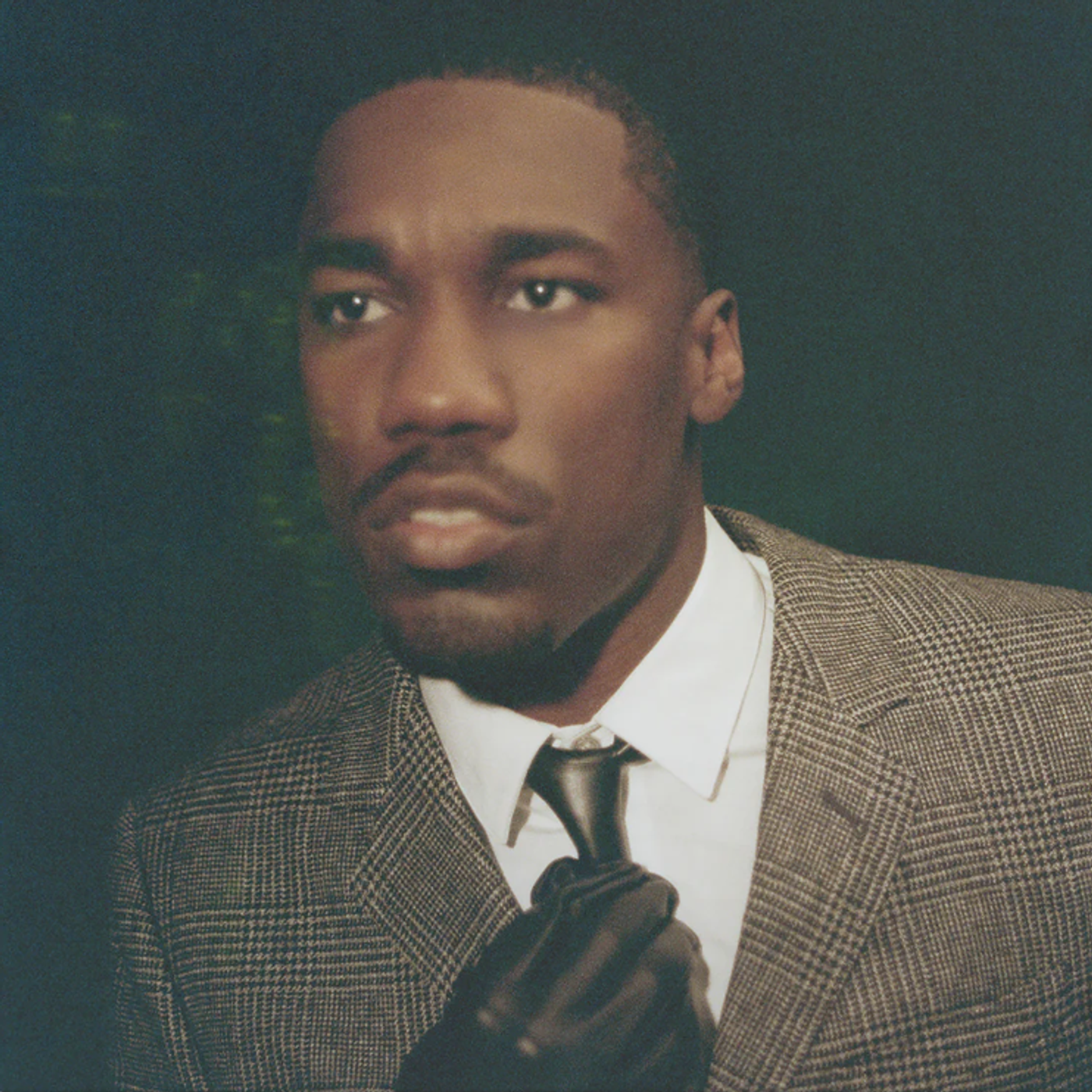
This is not recent or uncommon, though. Trends already began emerging in 2020, with album covers such as The Weeknd’s After Hours and Dua Lipa’s Future Nostalgia not only referencing 1980s aesthetics but also reinforcing a broader return to nostalgic, analogue-inspired visual styles. Interestingly, due to the current wide usage of analog visual elements, it feels as if this style is the new norm.
A counterattack to this can be seen in highly digitalised covers. Take Midnight Sun by Zara Larsson or Nick Leon’s Tropical Entropy. They present an uncanny, idealised version of a summer utopia, one where everything is perfectly saturated, or where subtle glitches make you realise you are inside a VR fantasy. There seems to be an increasing adoption of almost ironically over-digitalised imagery used as subversive world-building. Rather than rejecting digital technology, these covers exaggerate it. They push artificiality so far that it begins to collapse in on itself. In doing so, they expose the constructed nature of digital perfection and turn technological excess into commentary.
Y2K & McBling
As fashion trends in 2025 returned to the aesthetics of the 2000s, audiovisual trends were no exception. This resurgence had already been academically noted in 2023 by Yang, Xiaochun in the article "Retro Futurism: The Resurgence of Y2K Style in the Fashion Field." The article clearly outlines the background of the aesthetic and the reasoning behind its return. While it does so using examples from fashion, these ideas bleed into other forms of art direction, including photography and, by extension, album cover art. Originating as a reference to a computer bug, the style mirrors the emergence of new yet faulty technology, combining a forward-looking technological vision with lingering retro concepts which can be described as a "retro-futurist vision." The style carries notions of a "future utopia," and Yang notes that the most representative example of Y2K style's return is the early autumn series of cooperation between Dior Men 2019 and the famous Japanese artist Hajime Sorayama. The boundaries between humanity and robots were blurred, as cold, metallic, perfected materials met their opposites in warm, imperfect human bodies. This tension is one that album cover art has absorbed too. Oklou's Choke Enough is a clear example, its cover trading in the foggy, digital textures and cool palette that define the Y2K visual register. The article also outlines the distinction between Y2K style and "McBling," widely popularised by Paris Hilton in the reality show The Simple Life, an aesthetic defined by metallised fabrics, flip phones, skinny low-cut jeans, and bolder, more colourful makeup and hairstyles. Both currents appear to be resurging today, surfacing across creative directions that pull us back into the early 2000s, whether through a retro-technological lens or a colourful, maximalist, and unapologetically bold one.
Locations
While some album covers such as Sudan Archives’ THE BPM, Teyana Taylor’s Escape Room leaned into the rise of technology, many others returned to naturalistic themes, offering an escape from the constant noise of modern life. What stood out across this sample of albums was the varied and imaginative use of nature. The desert, for example, featured on albums by Pulp, Bob Mould, Davido 5ive, and Tate McRae, evoked a sense of freedom, mystery, and isolation from a bustling world. Water and beaches were also prominent motifs, with Ichiko’s aquatic imagery and Girlpuppy’s coastal scenes immersing listeners in tranquil spaces that offer respite and perspective far from the overwhelm of city life.
But beyond these generalisations, each cover relates to nature in its own respect. Going back to caroline 2, the photo is taken from inside a car on a highway, which creates a frame for the photo and a division between the nature in the backdrop and the modernity of the fast-paced road in the midground. This frame is completed by a passenger's raised hand, as if reaching for something or attempting to feel the air resistance coming from the open window. Here, we are placed within a format often used in visual media to capture a specific in-between state, neither here nor there, suspended between departure and destination. It is often used as a means of contemplation and a moment of enjoyment. A moment typically accompanied by music rather than dialogue. It is this framing and these details that ultimately mould what the cover proposes as the feelings evoked by the music. Thus, even though we may point to the use of similar locations, a closer look will always reveal more about the unique DNA of an album.
As with the previous album discussed, even though an album cover exhibits nature, it will often be interrupted by the addition of human creation placed in the foreground or midground to incite larger meanings. Such is the case for GOLLIWOG by Billy Woods and DeBÍ TiRAR MáS FOToS by Bad Bunny.
The cover of GOLLIWOG features a handcrafted golliwog doll placed in the middle of a forest blanketed with fallen autumn leaves, referencing the album’s title. The term “golliwog” was coined by English children’s book author and illustrator Florence K. Upton, likely from golly plus polliwog. The character first appeared in Upton’s 1895 book The Adventures of Two Dutch Dolls and a “Golliwogg” as a gentlemanly toy doll with a monstrous appearance. While nothing in the original text explicitly indicates that the doll represents a Black person, the story even includes a human-looking “jovial African” doll, the Golliwogg’s design has often been interpreted in that way, and by the 1970s the term had entered slang as a racialized word. Through both the imagery and the title, the album cover signals the unsettling, reflective tone of the music. Billy Woods employs this imagery deliberately and critically rather than nostalgically, placing a doll historically tied to racist caricature at the center of an album that confronts social trauma and historical violence. In an interview with Pitchfork, Woods recalls writing as a child about an “evil version” of the titular doll, hinting at the haunting, uncanny quality he brings to the album’s aesthetic. The cover evokes early autumn, with brisk air and leaves still on the trees, and sunlight filtering through the forest, creating an unsettling dichotomy between brightness and unease, fear. The cover becomes entirely haunting yet powerful in its message.

In contrast to focusing on the pain of the past, Bad Bunny's DeBÍ TiRAR MáS FOToS cover captures the reminiscence of a beautiful moment passed, the quiet intimacy of everyday life. The image shows two white plastic Monobloc chairs set in a backyard, surrounded by prospering greenery and coated in sunlight, shot by Puerto Rican photographer Eric Rojas as a visual expression of the album's title, which translates to "I should have taken more photos." These chairs, the kind often found at family gatherings or neighbourhood get-togethers, immediately evoke nostalgia and a sense of home, a pause from the pressures of life where memories are made and shared. The scene feels deeply rooted in Puerto Rican culture and broader Latin American communal traditions, reflecting a sense of belonging rather than signalling wealth or status. At the same time, the emptiness of the chairs suggests absence and invites reflection, visually reinforcing the album's title and its reference to moments that were not documented or preserved. The restrained composition directs attention to what is missing rather than what is shown, foregrounding themes of memory and loss. This celebration of Puerto Rican culture is further emphasised throughout the album itself, which draws on rhythms and sounds rooted in boricua tradition, among them bomba, plena and música jíbara. In this sense the album as a whole becomes an act of cultural preservation, a pushback against the erosion of local traditions under broader homogenising forces. The combination of cultural specificity, emotional restraint and quiet resistance is what makes the cover so compelling, a reminder that powerful visual storytelling does not always require spectacle.
What about the album covers that chose to engage with the indoors? Instead of high-energy urban environments, they draw the viewer into a more introspective space, one rich with personal narrative. In each case, the artist is often positioned at the center of the frame, frequently captured in a mid- to long-shot, allowing the room itself to assert presence, tell a story, and shape the emotional tone of the image.
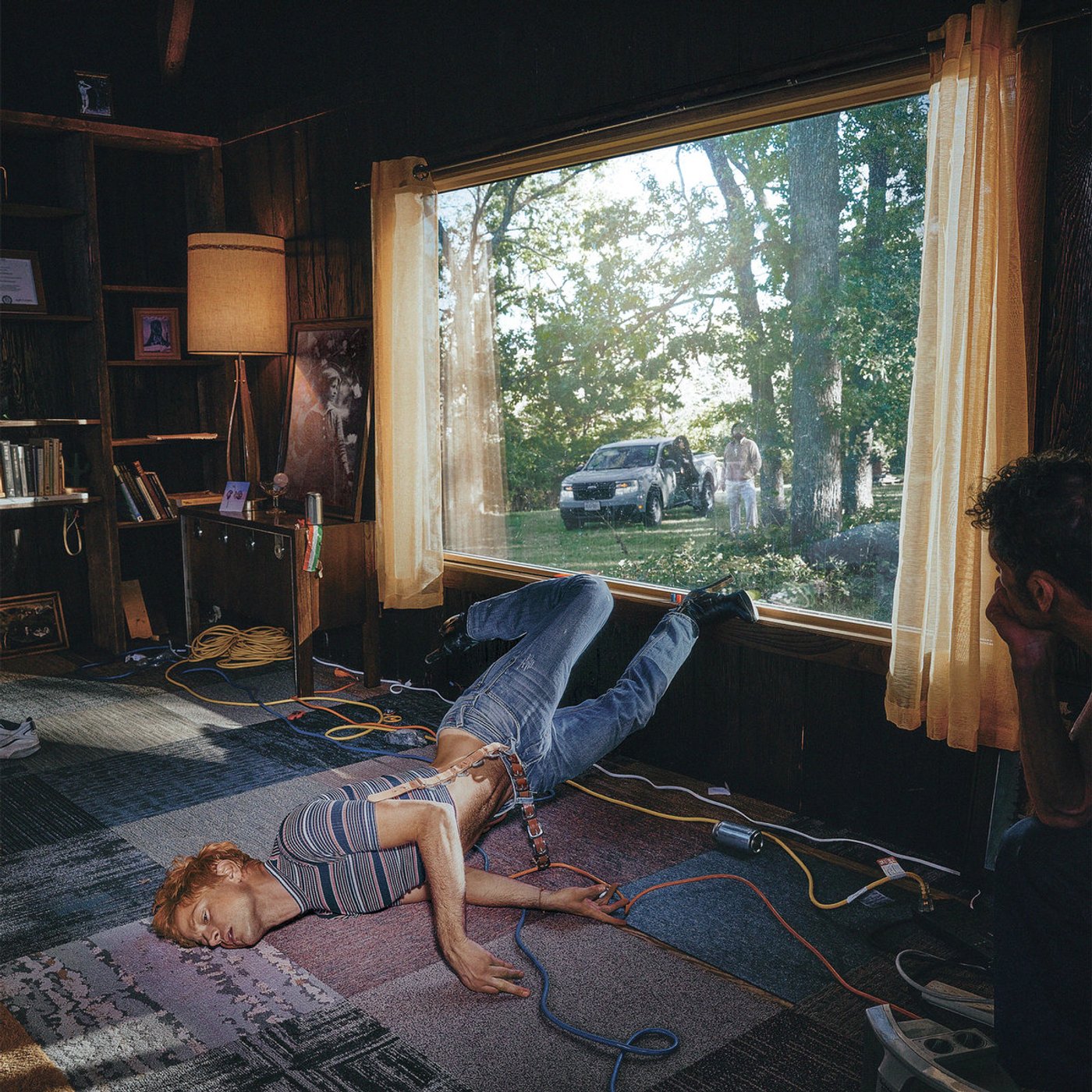
The cover of Perfume Genius’ Glory places Mike Hadreas at the center of the frame in an awkward, unconventional position. His body is sprawled and slightly contorted, belt undone, eyes open yet distant, giving the impression of someone emotionally exposed or suspended between states. This departure from traditional portraiture reflects the vulnerability and discomfort that run throughout the album. In an interview with Grant Sharples for Uproxx, Hadreas explains that the image emerged from his collaboration with photographer Cody Critcheloe. He cites films such as The Piano Teacher, Julien Donkey-Boy, and Humanity as points of inspiration. As he describes it, “There’s tenderness, but then it’s also really revolting. There’s something really human about it.” That tension is visible in the cover itself. The brightly lit, seemingly safe atmosphere of a cabin-in-the-woods setting suggests comfort or retreat, yet the scene feels destabilized. Hadreas appears watched, perhaps abandoned, perhaps cared for, it is unclear. A car lingers in the background and another figure sits beside him without intervening. The image resists a single narrative. Instead, it unfolds in layers, built from juxtapositions and unanswered questions, where openness and exposure coexist with ambiguity and unease. It is only in the music video for “It’s a Mirror” that the full context of the cover becomes clear, revealing it as a still taken from the same universe as the video. The narrative unfolds as a story of vulnerability, abuse, and self-discovery, ultimately culminating in the symbolic destruction of a version of the self.
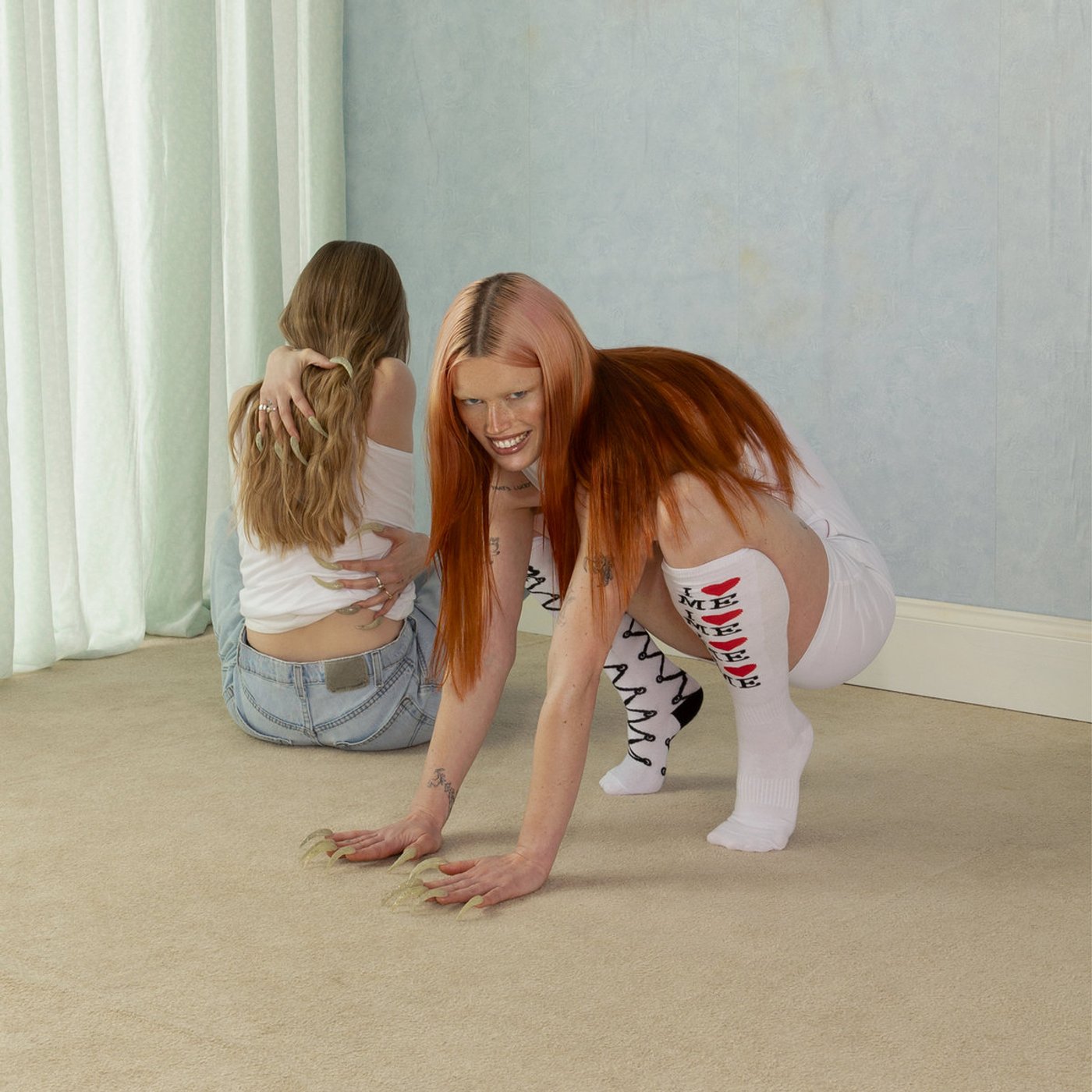
The cover of moisturizer by Wet Leg presents a staged interior scene set within a largely empty domestic space. At the center foreground, frontwoman Rhian Louise Teasdale faces the camera directly, her expression marked by an exaggerated, fixed smile that borders on discomfort. She assumes a pose that evokes the agile, predatory posture of a horror figure, reminiscent of classic suspense films or Parker Finn’s 2022 movie Smile or an even more likely reference to Aphey Twin’s Richard D. James album cover. This visual tension transforms a domestic space into something uncanny, suggesting that even familiar, everyday environments can contain discomfort or subversion. The image challenges cultural expectations around femininity, particularly the idea that women should always appear pleasant, agreeable, or “smile for the camera.” Teasdale’s wide grin, combined with her confrontational stance, conveys confidence and ironic playfulness, turning a cultural cliché into a statement of empowerment. At the same time, Chambers’ self-hug introduces an element of vulnerability. The gesture creates a contrast that reflects the band’s fascination with dualities such as humor and unease, intimacy and spectacle. The album cover therefore captures attention through its unsettling energy while also mirroring the music’s mix of playful irreverence and understated social critique. It invites listeners to question cultural norms by having the wider visual world of the album continue to play with exaggerated societal expectations through a surreal aesthetic. The underlying message feels deliberately tongue-in-cheek: you want me to smile? I will give you a smile. You want long, thick hair? I will give you long, thick hair. (reference to mangetout music video) It’s a strategy of exaggeration used as satire. The visuals take stereotypical expectations placed on women, such as smiling, looking pretty, or having long hair, and overperform them to the point that they become uncomfortable or absurd. By exaggerating these demands, the imagery exposes how artificial and restrictive the expectations are. In this sense, the gesture is not one of compliance but of ironic overcompliance, where fulfilling the request to an extreme degree ultimately undermines it. This satire remains perfectly in line with the band’s assertiveness, which comes through in their lyricism and powerful, energetic sound.
Another type of indoor space that draws the viewer in is the party, as seen on Dijon’s Baby. The cover radiates warmth and a sense of community, capturing the feeling of a celebration or concert at its peak, a moment where everyone feels connected and fully immersed. It evokes a slice of time you know you will always remember, where the music and the experience become inseparable. In an interview with Zane Lowe, Dijon mentioned that he began writing the album from a place of rage, but eventually realized that there was not actually that much anger in his life. That realization definitely comes through in the final version of both the cover and the music.
In contrast, Oklou’s choke enough presents a more laid-back hangout environment, a space where each person moves to their own rhythm, yet there is still a reassuring sense of belonging. You are content just to be there, surviving another day, playing Nintendo and shouting out from the window to a friend, conversations floating around you. Perhaps even reminiscent of an after-school hangout.
Both covers pull the viewer into a sense of community, whether through exuberant togetherness or relaxed companionship, and in doing so they reflect how the music can connect and resonate, both when we are alone and, especially, when we are with others to enjoy it.
The Photo Studio
Within the category of photography, it is impossible to ignore the freedom of creative experimentation that exists within the controlled space of a studio. This is often where the artist is able to shine most clearly, using carefully constructed environments that range from stark minimalism to expressive maximalism. Whether it is the playful, fragmented cutouts of the artist seen on JADE’s cover, or the chaotic scene in Demi Lovato’s It’s Not That Deep, these visuals suggest a conscious embrace of performance and self-construction. The studio becomes a space where identity can be exaggerated, multiplied, or broken apart, allowing artists to explore different versions of themselves while maintaining full control over how they are seen.
The two British artists, Central Cee and PinkPantheress, both use their album covers to signal a clear connection to their home country. Oakley Neil Caesar-Su, better known as Central Cee, appears in a mid-close-up studio shot with a thick chain hanging around his neck and a bold charm shaped like the English crown. The scale of the pendant makes it the visual focal point of the image, while a beanie emblazoned with the Union Jack further reinforces the symbolism. The result is a direct but effective statement that merges a visual language of material success with national pride.
Where Central Cee’s imagery communicates status and authority, PinkPantheress builds a more whimsical visual world in which cultural references, girlhood nostalgia, and national symbolism blend together. Her cover leans into a more playful aesthetic, evoking the charm of a scrapbook through a collage of recognizable English imagery. The winner of the British Producer of the Year award at the BRITs has often spoken about the importance of carving out a niche and cultivating a distinctive visual identity within today’s crowded musical landscape. By leaning into elements of British cultural nostalgia, including gingham patterns, scrapbook aesthetics, and references to early-2000s cartoons, PinkPantheress has developed a visual language that feels immediately recognizable. This becomes especially clear in her collaboration with Zara Larsson on the track “Stateside.” In the music video, the two pop stars stage a visual crossover between their respective aesthetics. Red contrasts with pastel tones, while royal symbolism is set against a sun-drenched beachy atmosphere. The contrast highlights how carefully constructed both artists’ visual worlds have become. In an era where image and sound travel together across social media feeds, this level of visual clarity is not just for the aesthetics. It is strategic, and it has helped both artists reach a new level of global visibility.
Artists who, in some form, tie their personal image, body, face, or style to their music and its marketing are usually positioned at the center of the album cover. Whether it's within a summer fantasy glow of orange and turquoise, as seen on Addison Rae's Addison or Taylor Swift's The Life of a Showgirl, Amaarae making herself the black star of the Ghanaian flag on Black Star, FKA Twigs' close-up on Eusexua, or Lily Allen depicted in a painted portrait on West End Girl, the face is there as a reminder of who is behind the music. But minute details count. The pose of the artist or even the gaze can say a great deal. In film theory, the gaze is thoroughly discussed, mostly according to how it can change the relationship between spectator and the diegesis. In terms of advertising studies, Schroeder writes, to gaze implies more than to look at, it signifies a psychological relationship of power in which the gazer is superior to the object of the gaze.8 Schroeder, J., in Barbara B. Stern, Representing Consumers: Voices, Views and Visions (1998) London: Routledge, p. 208. In visual semiotics, Kress and van Leeuwen build on this further, drawing a distinction between "demand" and "offer" images. When a subject looks directly at the viewer they make a direct visual demand, entering into an implied relationship. When they look away, they offer themselves up as something simply to be observed.9Kress, G. and van Leeuwen, T., Reading Images: The Grammar of Visual Design (1996) London: Routledge. On an album cover, the artist looking into the camera is a claim of power as much as a bid for attention. In contrast, the averted gaze is an invitation to observe, as though we are being allowed to peer into something quite personal to the artist.
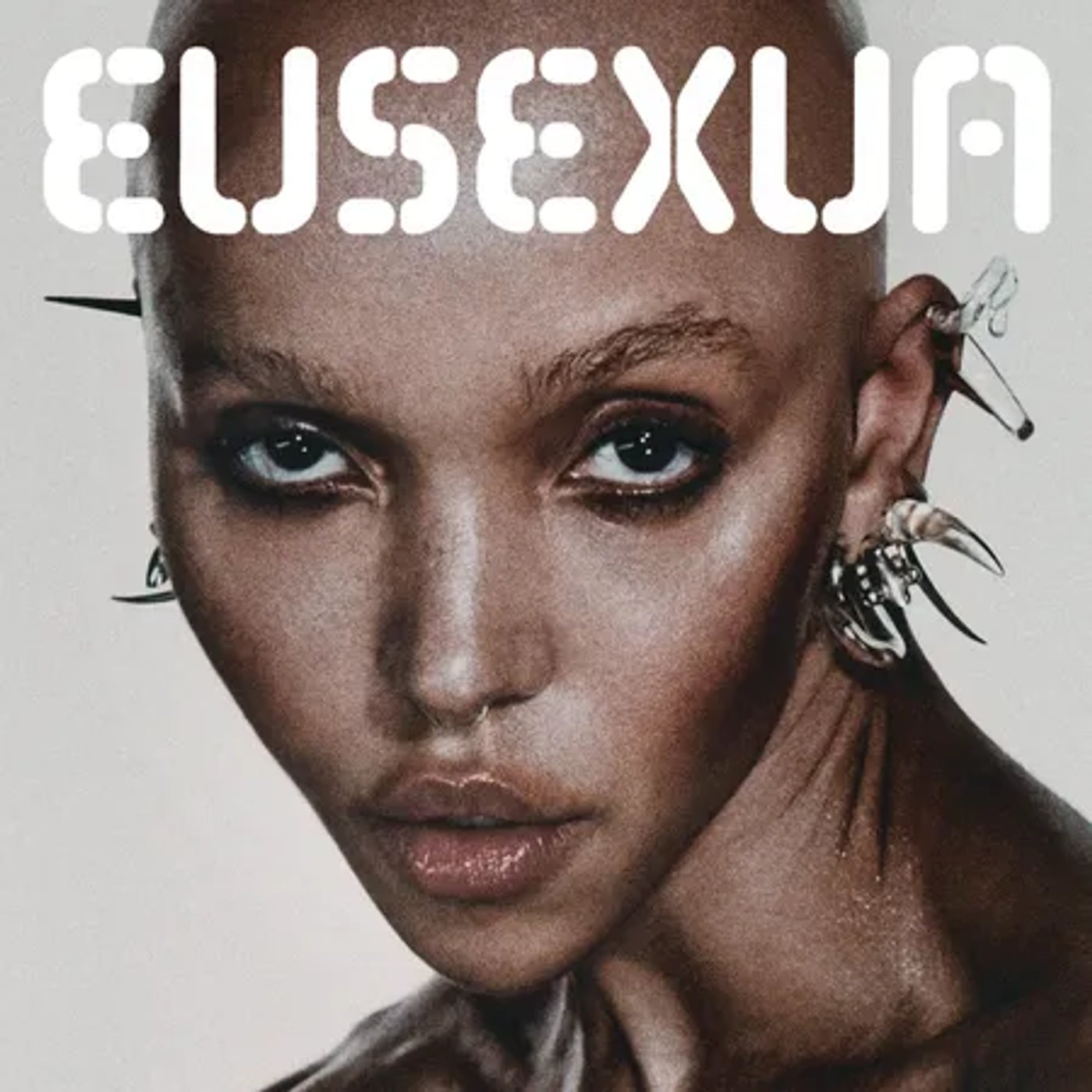
Beyond the gaze, even the face on the album cover is rarely just a face. Without it, the music might still find an audience, but the persona projected through the artwork helps construct something beyond the songs themselves, a star whose presence and appeal can be marketed, followed, and sold. Record labels understand this well. Attaching a curated image to a sound is also attaching a story, a character, and that’s what sells.
No direct academic or industry study has isolated the impact of an artist’s face on cover art in terms of increased sales or streams. However, as Hanna Berg notes in Faces of Marketing, “The way in which people are depicted in marketing varies, and several important depiction characteristics are related to faces. Human faces are particularly important in person perception. Faces easily attract our attention, and we derive much information from just a brief glance at another human face, such as person characteristics, facial expressions, and the recognition of familiar.” This suggests that, even without concrete sales data, featuring an artist’s face can intuitively draw attention and establish a sense of connection with potential listeners. Fracaro and colleagues, in Disc-Cover Complexity Trends in Music Illustrations from Sinatra to Swift, add that the “person” class is the most frequent semantic element across all genres. They argue that this widespread use of portraiture “may help explain the moderate, tightly-grouped complexity scores that form the stylistic norm, potentially reflecting constraints on visual language diversity,” and that while more experimental genres often push toward abstraction, other genres rely on artists’ images as a promotional tool, producing lower visual complexity.10Fracaro, Nicolas, et al. "Disc-Cover Complexity Trends in Music Illustrations from Sinatra to Swift." arXiv preprint arXiv:2510.00990, 2025, pp. : 7-8. Similarly, Dorochowicz and Kostek’s study highlights that “an artist’s photograph is contained in most of the photographs in all countries apart from the UK and South Korea. As for music genres, in only about half of them, there is a high percentage of photographs of an artist contained in them.”11Dorochowicz, Aleksandra, and Bożena Kostek. "Relationship between album cover design and music genres." 2019 Signal Processing: Algorithms, Architectures, Arrangements, and Applications (SPA). IEEE, 2019: 5. In our set of album covers, 58 of the covers featured the artist or the band’s frontperson, showing that while a face isn’t universal, it remains a consistent branding strategy in many contexts. Although no study sets this theory in stone, marketing and sociology suggest that featuring the artist front and center can enhance attention, reinforce identity, and communicate brand at a glance. For example DJBooth’s Staff remarks that “if an artist’s music is known for being upbeat and playful, a colorful and whimsical album cover can help convey that to us”.12“Artwork Directly Impacts Artist Discovery on Streaming Services.” DJBooth, 17 Feb. 2023, https://djbooth.net/features/2023-02-17-artwork-directly-impacts-artist-discovery-on-streaming-services Whether a cover shows a face or a more abstract design, the choice guides perception, shapes narrative, and establishes a visual presence that resonates with audiences.
Bands, producers, and DJ albums often take a different approach, creating covers that might have no human presence at all. This often reflects music that is less about personal storytelling and more about mood, texture, or sonic experimentation. The album cover, in these cases, mirrors the music’s focus. Examples include Lorde’s Virgin, Bad Bunny’s DeBÍ TiRAR MáS FOToS, Little Simz’ Lotus, Justin Bieber’s Swag, Deftones’ Private Music, Blawan’s SickElixir, DJrum’s Under Tangled Silence, Bassvictim’s Forever or Oneohtrix Point Never’s Tranquilizer, where the absence of a central figure does not diminish the cover’s impact or memorability. To put it briefly, Cameron Winter’s solo Heavy Metal places the artist front and center in a close-up, while the Geese’s Getting Killed features an anonymous13If you research it, it is actually band member Emily Green, though still anonymous without contextual reference. figure as said in to Be Magazine, “Gabriel-like” figure, in tune with biblical references of the album as its protagonist. The band members themselves remain largely unseen, and unless deliberately sought out, their identities are secondary to the work. Some artists, especially those seeking distance from a highly publicized or overexposed image, may opt for an extremely minimalist cover, letting the title, typography, and simplicity carry the message instead, as with Justin Bieber’s Swag.
Final remarks
As the first handshake between artist and listener, album covers seek to draw us in and to translate sound into introductory visual cues. But even more than that, a contract begins to form, one which considers what genre or genres of music the album fits into, the themes it evokes, and the overall feeling it seeks to invoke through sound and lyricism.
In 2025, album art styles were a continuation of what has already been seen in the past few years: a rebirth of visual aesthetics from the late 1990s and early 2000s, analogue photography resisting digital fatigue, and an escape into naturalistic environments.
What the qualitative analysis reinforced was that there is no single formula for a cover. Photography, however, remained the most popular choice as the format of choice for the majority of albums.
The use of the artist as a central figure on the cover has persisted and, given the importance of artist recognition within music marketing, it is unlikely that this will change anytime soon. There are, of course, a large number of covers which contest this format and choose to focus on graphic design, or simply on naturalistic or conceptual photography for a more anonymous approach not seeking to attach faces to the music.
The most memorable covers tend to be those where every visual choice serves as a clue towards an intertextual reference, as is the case with a great deal of art analysis. These covers offer social commentary, historical references, and detailed storytelling without making any of it explicit, leaving room for deeper contemplation and interpretation on the listener's part.
What feels most significant about 2025's album art, however, is what it reveals about the cultural moment it emerged from. At a time when AI has made image generation effortless and ubiquitous, the covers that rose to the top of critical lists were overwhelmingly the product of deliberate, considered human choices. An intentional contorted sprawl. A pair of empty chairs. A doll in an autumn forest. These images are far from accidental, and that is precisely what gives them meaning.
In a world increasingly unsure of where human creativity ends and artificial generation begins, album covers are a reminder that there are plenty of creative directors who bear no interest in replacing music's long-standing visual traditions with AI. Hopefully it stays that way. c:
Get RÜTM in your inbox

Antenne 47: Radio Sofa opens web radio café-bar in Paris
A conversation with Valentin and Noé from the collective behind Radio Sofa and the new hybrid space in Paris for the curious-minded, Antenne 47.

Smerz - 12.04.26 - Gaîté Lyrique
Smerz promised Paris a taste of Big city life. The aesthetic delivered. But the show left behind a trail of confused ambiance.
